Measuring Carbon Dioxide – CO₂ & eCO₂ Sensors

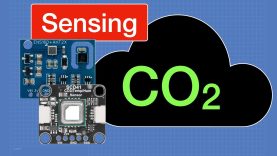
Discover how to measure Carbon Dioxide (CO₂) using a microcontroller with inexpensive sensors. You’ll also learn the difference between eCO₂ and CO₂.
Article with code: https://dronebotworkshop.com/co2-sensors
More articles and tutorials: https://dronebotworkshop.com
Join the conversation on the forum: https://forum.dronebotworkshop.com
Subscribe to the newsletter and stay in touch: https://dronebotworkshop.com/subscribe/
Carbon dioxide is part of the “carbon cycle”, a process that regulates all life on Earth. A small amount (approximately 400 parts per million) is present in fresh air, and at these low levels, it is perfectly safe.
However, high concentrations of CO₂ can be very harmful, even fatal. The bad news is that carbon dioxide levels indoors are almost always higher than those outdoors.
Being able to measure carbon dioxide is a convenient thing. You can monitor CO₂ levels and use the information to take action, such as activating ventilating fans.
Today, we will examine two sensors that measure carbon dioxide in distinctly different ways. The first, the ENS160, is a very inexpensive sensor that measures eCO₂, or “estimated CO₂”. The second sensor, the SCD41, is slightly more expensive, but it measures actual carbon dioxide levels.
Both sensors are I2C devices and are very easy to use. I’ll be pairing them with a Seeeduino XIAO ESP32-S3, but any 3.3-volt microcontroller will probably work. We’ll test them both out, then combine them in the same circuit.
Here is the Table of Contents for today’s video:
00:00 – Introduction
01:23 – Measuring CO₂
04:50 – Look at Sensors
05:51 – ENS160
14:14 – SCD41
20:43 – Multiple Sensors
25:55 – Conclusion
Monitoring CO₂ levels in your environment is a vital step in ensuring that the air you breathe is safe.
I hope you enjoy the video!
Bill
source
You might be interested in