ESP32 Non Volatile Storage – FRAM, Flash & EEPROM

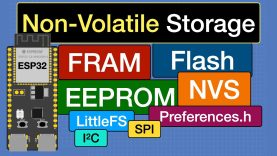
Non-Volatile Memory saves data even after the power is removed. Today, we will look at several different NV Memory options for the ESP32.
Article with code: https://dronebotworkshop.com/esp32-non-volatile-storage/
More articles and tutorials: https://dronebotworkshop.com
Join the conversation on the forum: https://forum.dronebotworkshop.com
Subscribe to the newsletter and stay in touch: https://dronebotworkshop.com/subscribe/
Being able to save data after your microcontroller is turned off is an essential feature for many applications. You can log sensor values, save user preferences and settings, or store large image files for your web-based interface.
Today, we will look at several methods of saving data after the power is turned off (or the ESP32 is rebooted).
First, we’ll examine the internal Flash memory that is embedded in every ESP32. We will see two methods of saving data in this non-volatile memory space.
Next, we will look at EEPROM, an old but reliable method of saving data for centuries!
After that, we’ll learn how to add extra Flash memory with a simple SPI Memory chip.
And finally, we’ll use FRAM, super-fast memory that can save your data for years without power.
Here is the Table of Contents for today’s video:
00:00 – Introduction
01:37 – Non-Volatile Storage
05:47 – Built-in Flash – NVS
16:48 – EEPROM
24:03 – SPI Flash
29:57 – FRAM
37:27 – Conclusion
Being able to retain data, files, and machine state is an effective programming technique that everyone should be familiar with.
I hope you enjoy the video!
Bill
source

You might be interested in